
Commercial HVAC Service for Restaurants: 2026 Guide

Table of Contents
Why Commercial HVAC Service for Restaurants Is Different
The Unique Challenges of Restaurant HVAC Systems
Step-by-Step: Diagnosing Common Restaurant HVAC Problems
Restaurant HVAC Maintenance: A Preventive Checklist and Schedule
Equipment-by-Equipment Maintenance Schedule
Seasonal Anchors
What Belongs in a Written Log
Commercial Kitchen Ventilation Service and Makeup Air Coordination
Commercial HVAC Maintenance Checklist for Restaurant Owners
What Affects Commercial HVAC Repair Cost for Restaurants
The Cost Buckets
What Actually Drives the Number Up
Repair or Replace: A Simple Rule of Thumb
How to Get a Straight Answer on Price
Choosing a Commercial HVAC Service Provider for Your Restaurant
Frequently Asked Questions
Last Updated: October 12, 2026
Why Commercial HVAC Service for Restaurants Is Different
A restaurant's HVAC system works harder before noon than most office systems work all week. At ACE ELECTRICAL AC & HEATING, we've handled heating, cooling, and electrical systems across the Greater New Orleans area since 1998, and restaurant buildings consistently present the toughest service conditions we see.
The stakes are higher too. When an office AC fails, people get uncomfortable. The U.S. Food and Drug Administration Food Code ties ventilation and temperature control directly to safe food handling, which is why restaurant systems need a service approach built around uptime rather than convenience.
The Unique Challenges of Restaurant HVAC Systems
Grease is the defining problem. Airborne cooking grease coats coils, fan blades, and ductwork, which cuts airflow and forces equipment to run longer. Over time, that lost efficiency shows up as higher energy bills and more frequent breakdowns.
Heat load: Cooking lines, ovens, and dishwashers push kitchen temperatures far above normal commercial loads
Moisture: Steam and humidity accelerate corrosion and encourage mold growth
Occupancy swings: A packed Friday night and a quiet Tuesday afternoon demand very different airflow
Round-the-clock use: Equipment rarely gets the overnight recovery period a typical office system enjoys
Watch Out Skipping coil cleaning because "the AC still blows cold" is the most expensive shortcut in restaurant HVAC. Grease buildup silently raises operating costs for months before the compressor finally fails, usually on your busiest night.
Step-by-Step: Diagnosing Common Restaurant HVAC Problems
Start with the simplest explanation before assuming a major failure. Most restaurant HVAC complaints trace back to airflow, not refrigerant.
Check the thermostat and zone controls. Confirm the setpoint, schedule, and sensor location. A thermostat near a hot line will read the kitchen, not the dining room.
Verify airflow at the vents. Weak airflow points to clogged filters, dirty coils, or a failing blower.
Inspect the filters. In a restaurant, filters load up fast. A filter that lasts three months in an office may last three weeks here.
Listen to the equipment. Grinding, rattling, or short cycling signals a mechanical or electrical issue.
Check the condensate drain. A clogged drain triggers shutdowns and water damage.
Confirm the kitchen exhaust is running. A failed exhaust fan pulls the whole building out of balance.
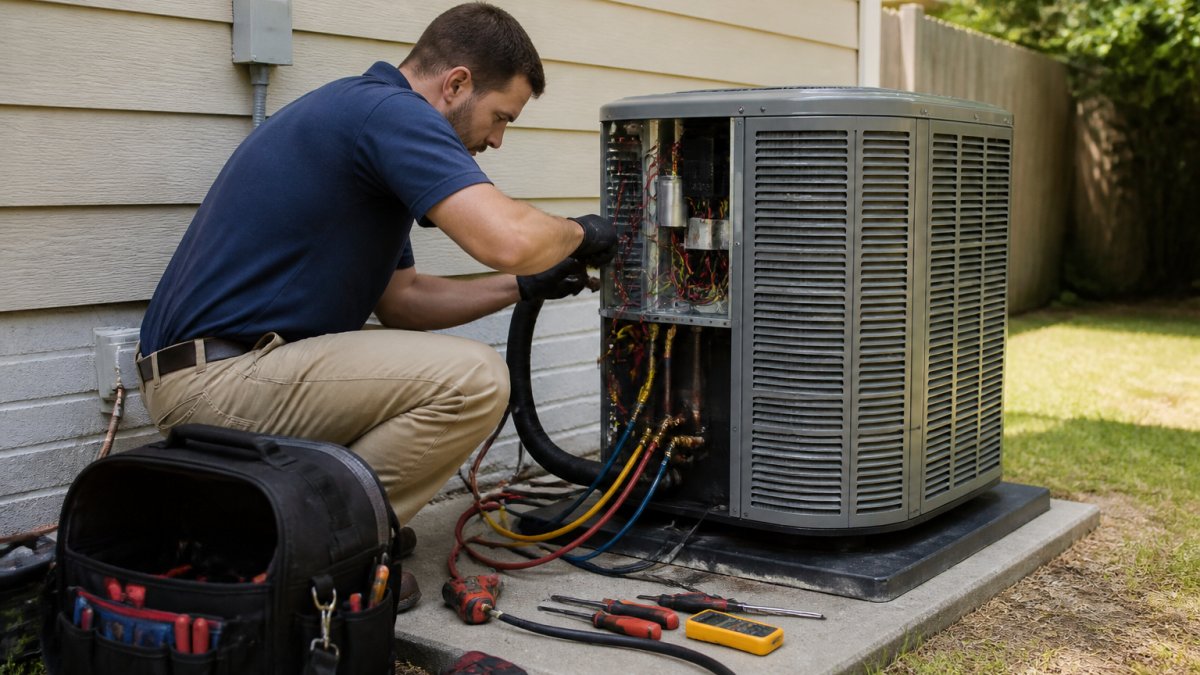
Call a certified technician for refrigerant or electrical faults. These require licensed diagnosis and proper equipment.
Expected result: You either resolve the issue at step three or four, or you give your technician a precise description that shortens the repair visit.
Pro Tip Log the outdoor temperature and the time of day every time a system acts up. Patterns like "fails only after 2 p.m. in July" tell a technician more in ten seconds than a vague "it's not cooling" ever will.
Restaurant HVAC Maintenance: A Preventive Checklist and Schedule
Restaurant HVAC maintenance works on a tighter calendar than standard commercial maintenance. Grease, moisture, and constant runtime compress every interval, and the equipment list is longer than most operators expect. A workable program covers five system groups: rooftop or split cooling equipment, kitchen exhaust and hoods, makeup air units, walk-in and reach-in refrigeration, and the controls that tie them together.
Equipment-by-Equipment Maintenance Schedule
Equipment | Task | Frequency | Who Handles It |
Rooftop / split AC | Replace filters | Every 2-4 weeks in heavy-cooking operations | Staff |
Rooftop / split AC | Clean condenser and evaporator coils | Quarterly, or monthly if the unit sits near the cook line | Certified technician |
Rooftop / split AC | Check refrigerant charge and superheat/subcool | Twice per year, before cooling and heating peaks | Certified technician |
Rooftop / split AC | Inspect belts, bearings, blower motor, contactors | Quarterly | Certified technician |
Kitchen exhaust hood | Degrease hood, filters, and duct access points | Per local fire code, often monthly to quarterly | Hood-cleaning specialist |
Exhaust fan | Inspect belts, bearings, and hinge kit; verify airflow | Quarterly | Certified technician |
Makeup air unit | Verify tempered supply air, filter condition, burner or coil operation | Quarterly | Certified technician |
Walk-in cooler / freezer | Log box temperature, check door gaskets and hinges | Daily (staff) / quarterly (technician) | Staff and technician |
Walk-in cooler / freezer | Clean condenser coil, check defrost cycle, verify superheat | Quarterly | Certified technician |
Condensate drains | Clear and test with water; check pan and safety switch | Monthly | Staff or technician |
Thermostats and controls | Calibrate sensors, verify zone schedules and setpoints | Quarterly | Certified technician |
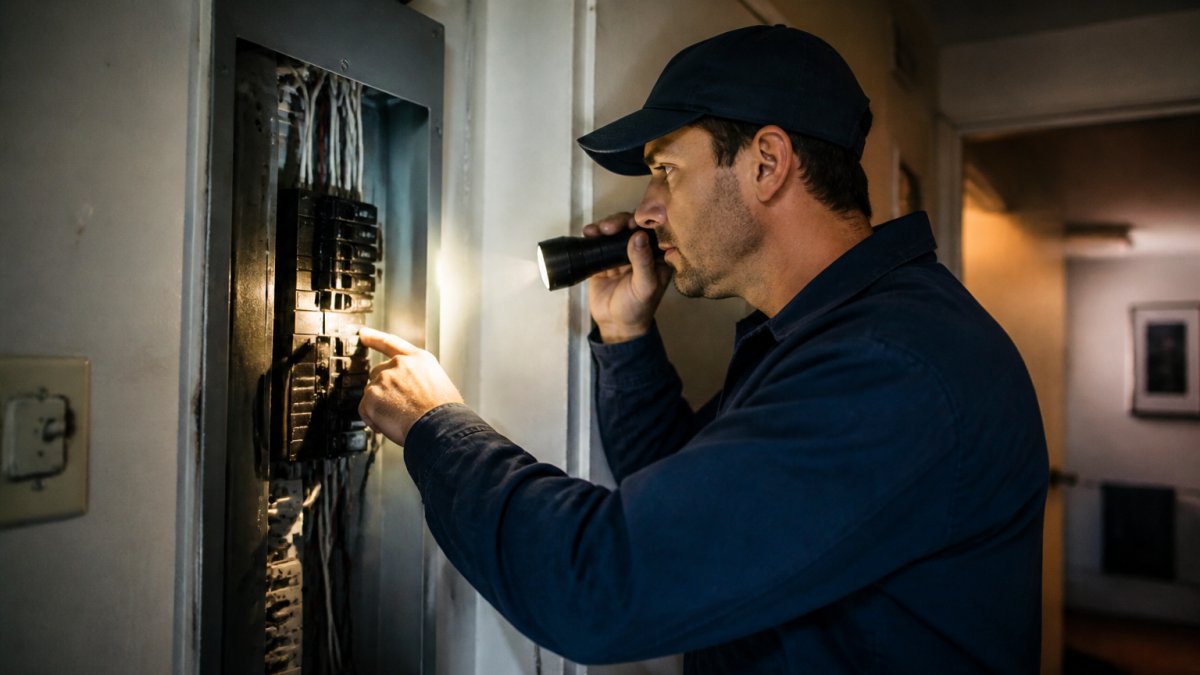
Electrical | Torque connections, inspect disconnects and contactors | Annually, or after any nuisance trip | Certified technician |
Seasonal Anchors
Two tune-ups per year cover most restaurants. Schedule the cooling tune-up in early spring, before the first 90-degree week, and the heating tune-up in early fall. In humid climates, add a mid-summer coil cleaning because grease and moisture combine faster than either alone. In cold climates, verify freeze protection and defrost controls before the first hard freeze.
What Belongs in a Written Log
A log is what turns a checklist into a program. Record the date, the equipment serviced, the readings taken (filter pressure drop, supply and return temperatures, refrigerant pressures, box temperatures), the parts replaced, and the technician's name. When a compressor fails at year six, the log tells you whether the failure was sudden or the end of a slow decline.
Pro Tip Set filter replacement on a calendar, not on a visual check. By the time a restaurant filter looks dirty, it has already been restricting airflow for a week or more.
A restaurant-specific plan should also cover refrigeration, because a failing walk-in is a food-safety event, not just a comfort problem. The U.S. Department of Energy guidance on commercial building efficiency notes that regular maintenance is one of the lowest-cost ways to control operating costs in high-use commercial spaces.
Commercial Kitchen Ventilation Service and Makeup Air Coordination

Commercial kitchen ventilation service keeps exhaust and makeup air working as one system, not two.
Makeup air units bring in replacement air, tempered so it doesn't wreck your cooling load.
This is the gap most restaurant owners miss. They call for AC repair when the real problem is a makeup air unit that stopped tempering incoming air months ago.
Commercial HVAC Maintenance Checklist for Restaurant Owners
Use this checklist as your working document. Print it, post it near the manager's office, and update it after every service visit.
Filters inspected daily, replaced on schedule
Coils cleaned quarterly or sooner in heavy-cooking operations
Condensate drains cleared and tested
Thermostats calibrated and zones verified
Exhaust hoods and fans inspected for grease buildup
Makeup air units checked for proper tempering
Refrigeration units logged for temperature consistency
Electrical connections and disconnects inspected
Belts, bearings, and motors checked for wear
Service records kept for every visit and repair
Key Takeaway The restaurants that avoid emergency calls aren't lucky. They run a written maintenance schedule and keep records, so small problems get caught at the quarterly visit instead of during Friday dinner service.
What Affects Commercial HVAC Repair Cost for Restaurants
Commercial HVAC repair cost for restaurants depends on the fault, the equipment, and how hard it is to reach. Two identical failures can price very differently depending on access and parts. Most competitors avoid the topic entirely, which leaves operators guessing. Here is how the numbers actually break down.
The Cost Buckets
Every repair invoice is built from four buckets:
Diagnostic fee. A flat charge to identify the fault. Some contractors waive it if you approve the repair; ask before you book.
Labor. Billed hourly or at a flat rate per job. After-hours, weekend, and holiday calls typically carry a premium over standard business-hour rates.
Parts. Compressors, blower motors, contactors, capacitors, and control boards vary widely in price. Refrigerant is priced per pound and has moved sharply in recent years.
Access and cleanup. A unit behind a grease-laden hood or above a drop ceiling takes longer to reach, and grease removal adds time on top of the repair itself.
What Actually Drives the Number Up
Equipment type and age. Rooftop units, split systems, and makeup air units carry different parts costs. Older equipment may need obsolete parts sourced at a premium.
Refrigerant type. Leak detection and recharge require certified handling and add labor. Older refrigerants can cost several times more per pound than current blends.
Access. A unit on an open roof is a quick visit. A unit wedged above a cook line is a half-day job before the repair even starts.
Urgency. Emergency and after-hours service carries a premium because it disrupts scheduling and pulls a technician from planned work.
Deferred maintenance. A neglected system usually needs more than one repair. Grease-fouled coils, a clogged drain, and a failing blower are often found in the same visit.
Repair or Replace: A Simple Rule of Thumb
A common industry guideline is the "$5,000 rule": multiply the age of the unit in years by the repair cost. If the result exceeds roughly $5,000, replacement is usually worth pricing out. Two other signals point the same direction:
Refrigerant leaks that keep returning. A system that loses charge twice in a season is telling you the coil or line set is failing.
R-22 equipment. If the unit still runs on R-22, parts and refrigerant are increasingly expensive and hard to source. Replacement often pays back faster than another repair.
How to Get a Straight Answer on Price
We don't publish flat prices because no two restaurant systems are the same. A quick diagnostic visit tells you the real number, and we explain the options before any work begins. Ask any contractor for three things in writing: the diagnostic fee, the hourly or flat labor rate, and whether after-hours rates apply. That transparency matters more than a lowball quote that grows once the technician is on the roof.
Watch Out A quote that is dramatically lower than the others is usually missing something, a diagnostic fee, a parts markup, or the labor to clean grease before the repair can start. Compare the full scope, not the headline number.
Choosing a Commercial HVAC Service Provider for Your Restaurant
Pick a provider that answers the phone at 2 a.m. and knows what a makeup air unit does. Those two things separate a restaurant-ready contractor from a general commercial outfit.
Ask these questions before signing anything:
Do you offer 24/7 emergency service? A system that fails during service can't wait until Monday.
Do you service commercial refrigeration too? One provider for HVAC and refrigeration means fewer handoffs when something fails.
Can you show restaurant experience? Ask for examples of restaurant or hospitality clients.
What's your response time? Get it in writing, not just promised.
Do you offer maintenance plans? A scheduled plan prevents emergencies instead of reacting to them.
Are your technicians certified? Certification matters for refrigerant handling and electrical work.
At ACE ELECTRICAL AC & HEATING, our certified technicians handle both HVAC and electrical systems, which means one call covers a failed compressor and the electrical fault that caused it.
A restaurant HVAC failure never picks a convenient moment.
Frequently Asked Questions
How often should restaurant HVAC systems be serviced?
Restaurant HVAC systems should be serviced quarterly, at minimum, due to heavy use and grease-laden air. High-volume kitchens may need monthly inspections. A preventive maintenance plan with a commercial HVAC service provider ensures regular filter changes, coil cleaning, and belt checks, reducing the risk of unexpected breakdowns during business hours.
What is the $5000 rule for HVAC?
The $5000 rule is a general guideline suggesting that if a repair costs more than $5,000 or exceeds one-third of the cost of a new system, replacement may be more cost-effective. For restaurants, this rule should be weighed against downtime costs and the age of the equipment. Consult a commercial HVAC service professional for a full assessment.
How does kitchen exhaust affect restaurant heating and cooling?
Kitchen exhaust removes large volumes of air, which must be replaced by makeup air to prevent negative pressure. If makeup air is not properly balanced, it can pull in unconditioned outdoor air, strain the HVAC system, and create uncomfortable drafts in the dining room. Coordinating exhaust and HVAC service is essential for energy efficiency and guest comfort.
What are signs a restaurant HVAC system needs repair?
Signs include inconsistent temperatures between the kitchen and dining room, unusual noises, increased energy bills, frequent cycling, and poor indoor air quality. If your commercial HVAC service provider notes refrigerant leaks or electrical issues, prompt repair is critical. Ignoring these signs can lead to food safety risks and health code violations.
Click to Call 504-914-8771

Comments