
Emergency AC Repair Cost Factors: 2026 Pricing Guide

Table of Contents
Emergency AC Repair Cost Factors: What Drives Your Bill
Emergency HVAC Service Fees: After-Hours, Weekend, and Holiday Rates
HVAC Emergency vs Standard Repair: Key Differences and Costs
How to Troubleshoot AC Before Calling for Emergency Repair
Warranty Coverage and Insurance: Reducing Out-of-Pocket Expenses
Repair vs. Replace Decision Matrix: When to Call It Quits
Conclusion: Making Informed Decisions for Emergency AC Repair
Frequently Asked Questions
Last Updated: October 4, 2026
Emergency AC Repair Cost Factors: What Drives Your Bill
When your air conditioner quits in the middle of a Louisiana summer, the bill that follows can feel like a second emergency. Understanding emergency AC repair cost factors is the difference between a fair invoice and a blank check.

Here is the part most homeowners miss: the biggest single multiplier is not the broken part. It is when you call.
Cost Factor | What It Covers | Why It Moves the Price |
Time of call | After-hours, weekend, holiday dispatch | Surcharges and overtime labor |
Failure complexity | Diagnostic time and scope of repair | Longer diagnosis, more labor hours |
Unit age and condition | Accessibility and part availability | Older systems slow the work down |
Parts required | Capacitors, contactors, motors, refrigerant | Part cost plus markup and sourcing time |
Warranty status | Manufacturer or service contract coverage | Shifts cost off your invoice entirely |
Key Takeaway Two identical repairs can land at very different totals depending on when you call and whether your system is under warranty. Those two factors are the ones you control before anything breaks.
Emergency HVAC Service Fees: After-Hours, Weekend, and Holiday Rates
Emergency HVAC service fees are the premium a contractor charges for dispatching a technician outside standard business hours. Most companies structure this as a base emergency service call fee plus a higher labor rate, and the two stack.
The structure usually looks like this:
Standard business hours: Normal labor rate, no dispatch premium
After-hours weekday evenings: Elevated labor rate plus a service call charge
Weekend surcharge: Applied on top of the after-hours rate for Saturday and Sunday visits
Holiday service: The highest tier, with the largest premium
A trip fee or diagnostic fee is often separate from the repair itself. That fee covers the technician's time and travel to reach you, and it may or may not be credited toward the repair if you approve the work. Ask before you book, because policies vary widely between HVAC contractors.
Pro Tip Ask two questions when you call: does the diagnostic fee apply toward the repair if you approve it, and what is the exact after-hours rate. Getting both answers up front prevents the surprise line item that frustrates most homeowners.
HVAC Emergency vs Standard Repair: Key Differences and Costs
HVAC emergency versus standard repair differs in three concrete ways: response time, labor pricing, and parts sourcing. A standard repair is scheduled during normal hours with parts ordered if needed. An emergency repair happens now, and you pay for that speed.
Emergency dispatch means a technician is routed to you immediately, often pulling from an on-call crew. That urgency carries a premium. Standard repair lets the contractor schedule efficiently, order the right part without rush shipping, and bill at the regular labor rate.
The trade-off is not always worth it. If your system is blowing warm air but still running, a next-morning appointment during standard hours can save a meaningful amount on the same fix. If the system is completely dead in July, emergency response is the right call.
Scenario | Emergency Repair | Standard Repair |
Response time | Immediate dispatch | Scheduled window |
Labor pricing | Premium after-hours rate | Standard rate |
Parts sourcing | Rush or on-truck stock | Ordered as needed |
Best for | No cooling in extreme heat | Non-urgent issues |
How to Troubleshoot AC Before Calling for Emergency Repair
Troubleshooting before you call can resolve the problem in minutes and save you the emergency fee entirely. Run this checklist first.
Check the thermostat: is it set to COOL, and are the batteries fresh?
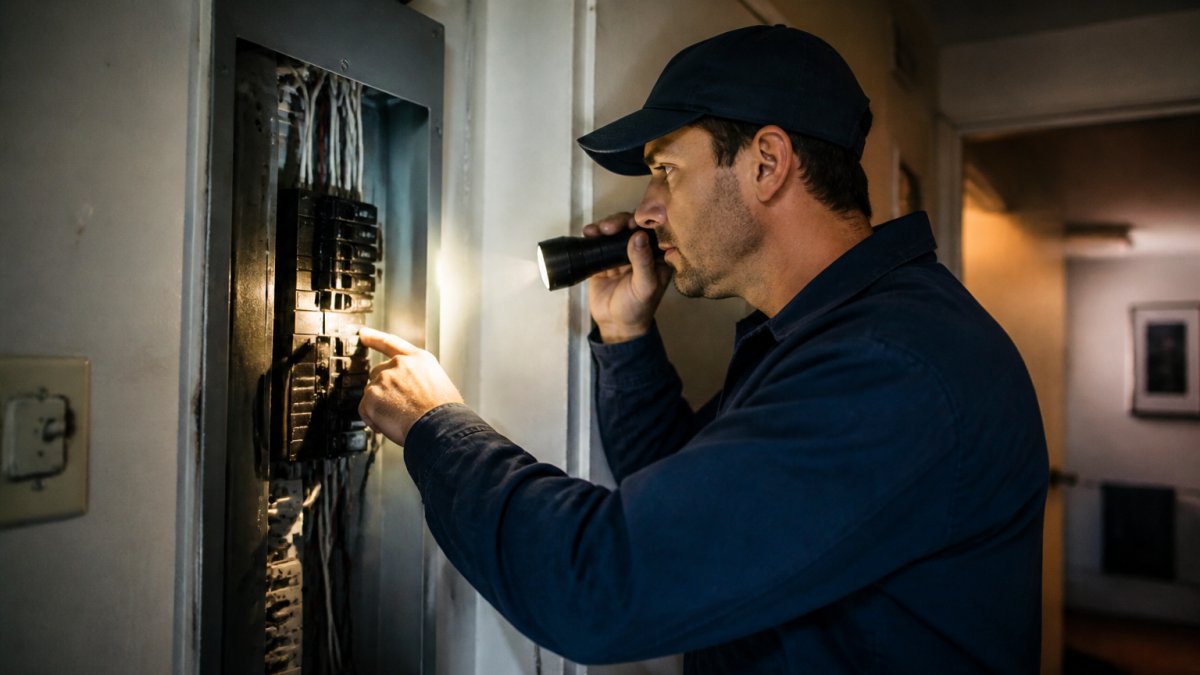
Confirm the breaker for the outdoor unit has not tripped
Replace a clogged air filter, which restricts airflow and can freeze the coil
Clear debris, leaves, and grass from around the outdoor condenser
Check the condensate drain pan for overflow or a blocked line
Verify the outdoor unit is receiving power and the fan spins freely
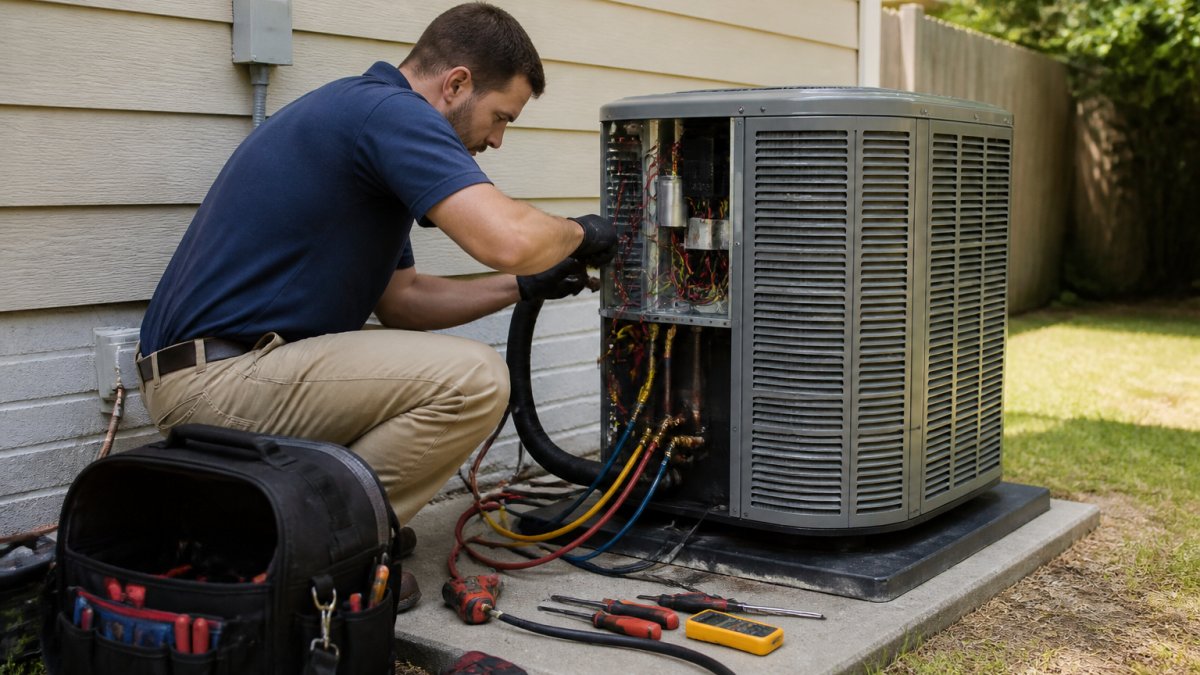
If the system still will not cool after these steps, the issue likely involves electrical components, a failed capacitor, a contactor, or low refrigerant. Those require a licensed HVAC technician and proper diagnostic tools.
Watch Out Do not keep resetting a tripped breaker on your outdoor unit. A breaker that trips repeatedly points to a real electrical fault, and repeated resets can damage the compressor, the single most expensive component in your system.
Warranty Coverage and Insurance: Reducing Out-of-Pocket Expenses
Warranty coverage is the fastest way to cut your out-of-pocket expenses, but only if you understand what your policy actually covers. The single most common misunderstanding is the parts-versus-labor split. A manufacturer warranty on a compressor, for example, may replace the compressor itself at no charge while you still pay several hours of labor, refrigerant, brazing supplies, and a new filter drier out of pocket. On an emergency call, that labor is billed at the after-hours rate, so the "covered" repair can still land as a meaningful invoice.
Before you authorize any repair, check these four things:
Manufacturer warranty (parts): Covers the failed component for a set period, commonly five to ten years on the compressor and ten years on parts for registered units, though terms vary by brand and model. Coverage is usually contingent on documented maintenance and on registering the unit within the brand's window after installation.
Labor warranty or labor allowance: A separate, shorter window, often one to five years, that covers the technician's time. If your unit is outside the labor window, the parts may be free while the labor is not.
Service contract / maintenance agreement: A plan with your HVAC contractor that may cover diagnostics, priority dispatch, or a set labor rate. These are most valuable for landlords and property managers running multiple units.
Home warranty or homeowner's insurance: Home warranties typically cover sudden mechanical failure for a flat service call fee, but exclusions for pre-existing conditions, lack of maintenance, and code upgrades are common. Standard homeowner's insurance generally does not cover mechanical breakdown, it responds to perils like fire, storm damage, or a fallen tree, not a failed capacitor.
Watch Out Skipping routine maintenance is the most common reason a warranty claim gets denied. Keep dated invoices for every tune-up, filter change, and prior repair, if you cannot show a maintenance history, the manufacturer can decline the parts claim even on a covered component.
A practical move before any emergency repair: ask the dispatcher to note the model and serial number on the work order, then call the manufacturer's warranty line with that number while the technician is still on site. If the part is covered, you can often have it sourced under warranty the same day instead of paying retail plus an emergency markup. For a system still under a labor allowance, confirm whether the contractor is an authorized service provider for your brand, an unauthorized repair can void the remaining coverage.
Repair vs. Replace Decision Matrix: When to Call It Quits
Deciding between repair and replacement comes down to age, repair frequency, efficiency, and the cost of the fix relative to a new system. The rule most practitioners use is the "50% threshold": if the repair quote exceeds roughly half the installed cost of a comparable new system, replacement usually wins on total cost over the next several years. On an emergency call, that threshold matters more, because the after-hours premium inflates the repair number you are comparing against.
Your Situation | Recommended Action | Why |
Under 10 years old, first major failure | Repair | Remaining service life is long; a single failed part is not a pattern |
10-15 years old, repair is a small share of replacement | Repair, then plan for replacement | Buy time, but budget for a planned swap before next summer |
Over 15 years old, second or third major repair | Replace | Repeat failures signal end of service life |
Compressor failure on an aging unit | Replace | Compressor is the most expensive single component; labor is extensive |
Repeated refrigerant leaks | Replace | Leaks often trace to a failing coil or line set that will keep leaking |
Repair cost approaching half the price of a new system | Replace | You are paying new-system money for old-system reliability |
Unit uses R-22 refrigerant | Replace | R-22 is phased out; recharge costs are high and supply is limited |
Two factors the table cannot capture deserve their own weight. First, efficiency: a system over 15 years old may run at a seasonal energy efficiency ratio well below current federal minimums, so replacement can lower monthly cooling costs, a benefit that compounds over the unit's life and partially offsets the upfront price.
Key Takeaway Run the 50% test on the repair quote, not on the emergency invoice alone. If the fix is under half the installed cost of a new system and the unit is under 10 years old, repair is almost always the smarter move. If the unit is past 15 years and this is a repeat failure, replacement is the lower-cost path over the next five years, even though the sticker price is higher today.
One more consideration for anyone weighing a repair under pressure: ask the technician for the expected remaining service life of the unit in writing, along with the repair quote. That single number turns a gut-feel decision into a comparison you can actually make.
Conclusion: Making Informed Decisions for Emergency AC Repair
The next time your system fails, you will face a decision under pressure, and the numbers on the invoice should not be a mystery. Knowing how emergency AC repair cost factors stack up, from after-hours rates to warranty coverage, puts you in control of the outcome.
If you need rapid-response cooling in the Greater New Orleans area, ACE Electrical AC & Heating has delivered 24/7 emergency AC and heating repairs since 1998. Our certified technicians diagnose the real problem, explain your repair versus replace options, and handle everything from emergency fixes to full system installations. Call 504-914-8771 and get your home comfortable again.
Frequently Asked Questions
How much does emergency AC repair typically cost?
Emergency AC repair costs vary based on several factors, including the time of day, the specific issue, and local labor rates. After-hours calls often include a surcharge, and the total bill depends on parts needed and repair complexity. For an accurate estimate, contact a licensed HVAC contractor directly. ACE Electrical AC & Heating provides transparent pricing and can be reached at 504-914-8771.
What factors influence the price of after-hours HVAC service?
After-hours HVAC service pricing is influenced by the time of the call (nights, weekends, holidays), the technician's labor rate, trip fees, and the urgency of the situation. Emergency service calls often have a higher base fee than standard business hours. Additionally, the cost of replacement parts and the complexity of the repair can increase the total. Always ask for a breakdown before work begins.
Is it cheaper to wait for standard business hours for AC repair?
Waiting for standard business hours can save you money on after-hours surcharges, but it may lead to more damage if the issue worsens. For example, a minor refrigerant leak could become a compressor failure, leading to higher repair costs. If your home becomes dangerously hot, especially with vulnerable occupants, emergency service is worth the extra cost. Weigh the risks before deciding.
What constitutes an HVAC emergency versus a standard repair?
An HVAC emergency typically involves no cooling during extreme heat, a complete system failure, or safety hazards like electrical burning smells. Standard repairs are non-urgent issues such as reduced airflow or unusual noises that don't immediately threaten comfort or safety. If you're unsure, call a professional for guidance. ACE Electrical AC & Heating offers 24/7 emergency service to help you decide.
Do emergency AC repair fees include the cost of parts?
Emergency AC repair fees usually cover the service call and labor, but parts are often billed separately. Some companies include a diagnostic fee that may be credited toward the repair. Always ask for an itemized estimate that separates labor, parts, and any surcharges. This transparency helps you understand the total cost and avoid surprises.
How can I avoid high emergency AC repair costs?
Regular preventative maintenance is the best way to avoid emergency repairs. Schedule annual tune-ups to keep your system running efficiently. Also, learn basic troubleshooting steps like checking your thermostat and air filter before calling for service. If you do need emergency repair, ask about warranties and consider a service contract for discounted rates. ACE Electrical AC & Heating offers maintenance plans to help.
Click to Call 504-914-8771

Comments