
Emergency Electrician Service New Orleans: What to Do

Table of Contents
Emergency Electrician Service New Orleans: When to Call and What to Do First
What to Do During an Electrical Emergency Before Help Arrives
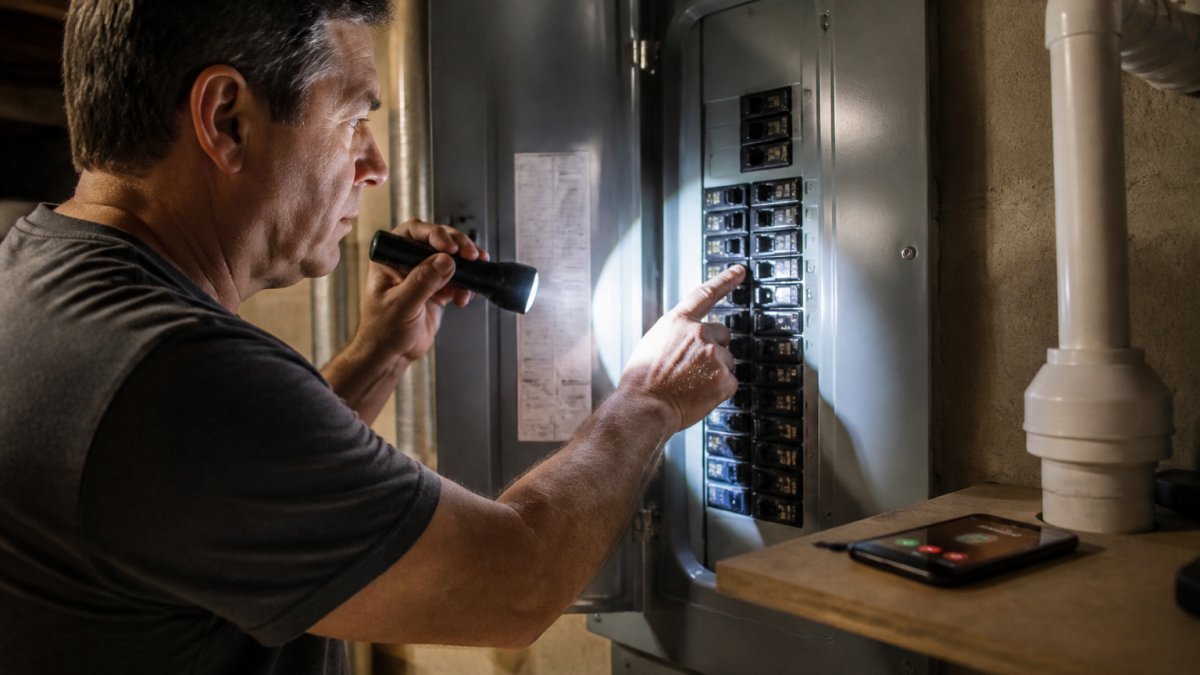
Step 1: Cut Power at the Breaker or Main Switch
Step 2: Evacuate if You See Smoke, Sparks, or Smell Burning
Step 3: Call 911 if There Is Fire, Then Call a Licensed Electrician
Electrical Problems That Need Immediate Attention
Sparks, Smoke, or Burning Odors
Tripped Breakers That Will Not Reset
Partial or Total Power Outages
Emergency Electrician Cost: What Affects the Price
What to Expect From a 24 Hour Emergency Electrician Visit
How to Verify Licensing, Insurance, and Workmanship Protections
Conclusion: Getting Reliable Emergency Electrical Help in New Orleans
Frequently Asked Questions
Last Updated: October 9, 2026
Emergency Electrician Service New Orleans: When to Call and What to Do First
An emergency electrician is a licensed electrical contractor who responds to dangerous or disruptive electrical failures outside normal business hours, usually within hours rather than days.
That is why this guide leads with action, not theory.
Below, we walk through exactly what to do before help arrives, which problems genuinely cannot wait, what drives emergency pricing, and how to confirm the person you are calling is actually licensed to work in your home.
Watch Out The single most common mistake we see is a homeowner resetting a breaker that keeps tripping. A breaker that trips twice in a row is reporting a fault, not being difficult. Forcing it back on can overheat damaged wiring inside a wall where you cannot see it.
What to Do During an Electrical Emergency Before Help Arrives
Your first move in an electrical emergency is to remove power from the affected circuit, then get people away from smoke, sparks, or burning smells. Everything else can wait.
Step 1: Cut Power at the Breaker or Main Switch
Find your electrical panel and switch off the breaker feeding the problem area. If you cannot tell which one it is, or if the panel itself is sparking, hot, or wet, shut off the main breaker instead.
If the panel is in a flooded garage or utility room, do not approach it at all. Call for help and keep everyone clear.
Step 2: Evacuate if You See Smoke, Sparks, or Smell Burning
Smoke, sparks, or a burning smell mean something is already failing. Get everyone outside, including pets, and leave the door open behind you so the problem is visible to responders. Do not unplug devices on the way out if it means walking back toward the smell.
Step 3: Call 911 if There Is Fire, Then Call a Licensed Electrician
Any visible flame, sustained smoke, or smell of burning insulation warrants a call to 911 first. Once the fire risk is handled, call a licensed electrician to find and fix the cause. A fire that gets put out does not fix the wiring that started it.
Electrical Problems That Need Immediate Attention
Three categories of electrical problem justify a middle-of-the-night call: anything producing heat, smoke, or sparks; a breaker that will not stay reset; and a partial or total loss of power you cannot explain. Everything else can usually wait for morning.
Sparks, Smoke, or Burning Odors
A burning smell near an outlet, switch, or panel points to overheating conductors or a failing connection. This is the clearest fire risk on the list. Shut off the circuit and call immediately, even if you see no flame.
Tripped Breakers That Will Not Reset
A breaker that trips once may just be overloaded. A breaker that trips again right after you reset it is telling you the circuit has a fault. Stop resetting it. Repeated resets push current through damaged wiring and can turn a repair into a replacement.
Partial or Total Power Outages
Losing power to part of the house usually means a tripped main, a failed breaker, or a loose service connection. Losing all power when your neighbors still have lights often points to your service drop or meter, which is utility territory. Report it to your utility and have an electrician ready to check your side once power returns.
Problem | Urgency | First Move |
Sparks, smoke, burning smell | Emergency | Cut power, evacuate, call 911 if fire |
Breaker trips repeatedly | Emergency | Stop resetting, call an electrician |
Partial power loss | Same-day | Check panel, call an electrician |
Total outage, neighbors dark | Utility first | Report to utility, then electrician |
Flickering lights, no heat | Schedule soon | Book a safety inspection |
Emergency Electrician Cost: What Affects the Price
Emergency electrician cost depends on when you call, how complex the fault is, and what parts the repair needs. After-hours and holiday dispatch usually carries a higher rate than a standard weekday visit, and a fault buried inside a wall takes longer to trace than a failed outlet.
A typical emergency invoice breaks into four line items:
Dispatch or trip charge. A fixed fee to get a licensed technician to your address, charged whether or not you approve the repair.
Diagnostic time. Billed by the hour or as a flat diagnostic fee. This is the labor to isolate the fault, not to fix it.
Repair labor. Billed hourly, with after-hours, weekend, and holiday multipliers applied on top of the base rate.
Four factors move the total most:
Time of day. Nights, weekends, and holidays typically cost more than weekday business hours. A call at 2 a.m. on a holiday sits at the top of the multiplier stack.
Diagnosis difficulty. A dead outlet is quick to find. An intermittent short circuit behind drywall can take an hour or more of meter work before anyone knows what to fix.
Parts and access. Older panels, aluminum branch wiring, and attic runs all add labor. A panel that has been painted over or buried behind shelving adds time before the real work starts.
Because every home is different, we give a clear estimate before work begins rather than quoting a number over the phone.
Pro Tip Ask these five questions before you authorize dispatch, and write down the answers: What is the trip or dispatch charge, and is it separate from the diagnostic fee? Is the diagnostic fee credited toward the repair if I approve the work? What is the after-hours multiplier compared to your standard rate? Will I get a written estimate before any repair labor starts? Is the work warrantied, and for how long? Getting those answers before the truck rolls saves an argument later.
You can check current licensing and complaint history through the state board before you book anyone, and ask any contractor for their estimate in writing. A legitimate contractor will put the scope, the price, and the warranty terms on paper. If the answer is "we'll figure it out when we get there," that is your signal to call the next number.
What to Expect From a 24 Hour Emergency Electrician Visit
A 24 hour emergency electrician visit follows a predictable sequence: secure the hazard, diagnose the fault, quote the repair, and fix what can be fixed safely that night. You should know each stage before the technician arrives so nothing feels like a surprise. The difference between a smooth call and a frustrating one is usually whether the homeowner understood what was happening at each step.
Here is how a typical call runs, with what you should expect to see and decide at each stage:
Phone triage. The dispatcher asks what you see and smell, and tells you what to shut off before the technician arrives. Good triage is specific: "Is the panel warm to the touch? Is there water on the floor near it? Can you see any discoloration on the breaker?" Vague triage, "we'll send someone", means the technician arrives without the parts or PPE the job likely needs.
Hazard control. The technician confirms the circuit is dead and checks for heat or moisture at the panel. This is a safety step, not a diagnostic step. If the panel is hot, wet, or showing scorch marks, the technician should not be opening it until the utility has been contacted or the main is confirmed de-energized from a safe point.
Diagnosis. Testing with a meter to isolate the fault, which may mean opening outlets or a junction box. This is the stage where the clock runs longest on hard faults. Ask the technician to walk you through what they are testing and what they are ruling out, a good one will narrate it without being asked.
Written estimate. You approve the scope and price before repair work starts. Read the scope, not just the number. "Replace failed breaker" and "replace failed breaker and inspect branch circuit for damage" are different jobs at different prices, and the second one is often the correct one.
Repair or temporary fix. Some faults can be corrected on the spot. Others need a part or a permit, so the technician makes the circuit safe and schedules the return. A temporary fix is not a failure, it is the honest answer when the correct repair requires a part that is not on the truck at 3 a.m. What matters is that the technician tells you clearly which one you are getting and why.
Follow-up and documentation. You should leave the visit with a written invoice that lists what was tested, what was found, what was repaired, and what remains open. If a return visit is scheduled, the invoice should say what part or permit is pending. Keep this paperwork, it is your warranty record and your proof of work if you ever sell the home.
Watch Out If a technician cannot explain what failed and why, ask again before signing anything. "It was just old" is not a diagnosis. A real answer names the component, the failure mode, and the reason it failed, a loose neutral at a backstabbed outlet, a breaker that has been tripping under load for months, a service conductor that has been rubbing against a sharp edge inside the mast.
Key Takeaway You are not expected to diagnose the fault. You are expected to know the sequence, ask what each stage produced, and refuse to approve work you do not understand. That is the entire homeowner side of an emergency electrical call.
How to Verify Licensing, Insurance, and Workmanship Protections
Verification takes about five minutes and protects you from unlicensed work that can void insurance claims. In Louisiana, electrical contractors are licensed through the state licensing board, and you can confirm a license number, insurance coverage, and complaint history before anyone touches your panel.
Run these checks:
Confirm the contractor's license number on the state board's public lookup
Ask for a certificate of insurance showing general liability and workers' compensation
Get the scope, price, and warranty terms in writing before work starts
A legitimate contractor answers all five without hesitation. If any answer is vague, that is your signal to call someone else.
Conclusion: Getting Reliable Emergency Electrical Help in New Orleans
Electrical emergencies are stressful because they combine danger with a clock. The homeowners who come through them well are the ones who cut power early, called before the problem spread, and hired someone they had already verified.
That is the standard we hold ourselves to at ACE ELECTRICAL AC & HEATING.
Click to Call 504-914-8771 and get your power back safely.
Frequently Asked Questions
Can you get an emergency electrician in New Orleans?
Yes. Licensed electrical contractors across the Greater New Orleans area offer 24/7 emergency service, including nights, weekends, and holidays. When you call, describe the problem clearly: sparks, smoke, burning smell, partial power loss, or a breaker that will not reset. A dispatcher can tell you whether to cut power at the panel and wait outside. Companies like Ace Electrical AC & Heating have served the area since 1998 with certified technicians available around the clock.
What electrical problems require an emergency electrician?
Call immediately for sparks from outlets or switches, smoke or burning odors near wiring, a breaker that trips repeatedly, partial power loss affecting multiple rooms, or any shock from an appliance. These are electrical problems that need immediate attention because they point to an electrical fault that can lead to fire. A flickering light or a single dead outlet can usually wait for a scheduled visit, but anything involving heat, smoke, or repeated tripping should be treated as urgent.
How much do electricians charge per hour in Louisiana?
Emergency electrician cost depends on the time of day, the complexity of the repair, parts needed, and whether it is a residential or commercial job. After-hours and holiday calls typically cost more than standard business hours. For an accurate estimate on your specific issue, contact Ace Electrical AC & Heating directly.
What should you do if an outlet is sparking?
Stop using the outlet immediately and do not unplug anything from it. Go to your electrical panel and switch off the breaker that controls that circuit. If you cannot identify the correct breaker, shut off the main breaker. Keep everyone away from the outlet, and do not attempt to reset the breaker until a licensed electrician has inspected the wiring. Sparks often signal damaged wiring or a short circuit that needs professional diagnosis before the circuit is re-energized.
Click to Call 504-914-8771

Comments