
Signs Your AC Compressor Is Failing: Diagnosis Guide

Table of Contents
Common Signs Your AC Compressor Is Failing
Warm or Room-Temperature Air from the Vents
Unusual Noises During Operation
Compressor Clutch Not Engaging
Intermittent Cooling or Sudden Stops
Outdoor Unit Clicking or Humming Without Starting
Circuit Breaker Repeatedly Tripping
AC Compressor Clutch Symptoms: What You're Actually Hearing
How to Test a Car AC Compressor: Safe Diagnostic Steps
What Causes AC Compressor Failure
Can You Drive With a Bad AC Compressor: Safety and Risks
AC Compressor Replacement Cost: What to Expect
When to Stop Using Your System and Call for Help
Frequently Asked Questions
Last Updated: October 17, 2026
Common Signs Your AC Compressor Is Failing
Your AC compressor is the heart of your air conditioning system. When it starts to fail, cooling performance suffers. At ACE ELECTRICAL AC & HEATING, we help homeowners recognize the warning signs before a breakdown.
Signs your ac compressor is failing often appear gradually. The key is catching them early, because a failing compressor whispers warnings before it fails.
Here are the most common signs:
Warm or Room-Temperature Air from the Vents
The most obvious sign is simple: your AC stops cooling. You turn it on, the system runs, but air flowing from your vents feels warm or room-temperature instead of cold.
A failing compressor can't maintain proper pressure in your refrigerant lines, so refrigerant doesn't circulate effectively and the air never gets cold.
Check your thermostat first. Make sure it's set to cool mode and the temperature is lower than the current room temperature. If settings are correct but air is still warm, your compressor is likely the culprit.
Unusual Noises During Operation
A healthy compressor runs quietly. When you hear strange sounds, something is wrong.
Listen for these specific noises:
Clunking or banging, metal parts inside are loose or damaged
Squealing, belt friction or internal wear
Grinding, bearings are wearing out
Clicking, electrical issues or mechanical binding
These signal internal damage, and the longer you ignore them, the more expensive the repair. Stop using the system and call for service immediately.
Compressor Clutch Not Engaging
Your compressor has a clutch that engages and disengages to control when the unit runs. When the clutch fails, the compressor can't turn on.
You'll notice the outdoor unit running but not cooling anything: the fan spins, but the compressor stays silent. The unit is trying to work, but the clutch won't connect the compressor to the engine.
A bad clutch is often an electrical issue, but it can also signal compressor damage. Either way, the system won't cool until it's repaired.
Intermittent Cooling or Sudden Stops
Sometimes the AC works fine, then suddenly stops cooling. Later, it starts working again. This on-and-off pattern is a classic sign of compressor trouble.
Intermittent cooling usually means:
Internal compressor damage causing pressure loss
Electrical connections failing under load
Refrigerant leaking slowly from worn seals
Thermal overload protection kicking in to prevent damage
The system may restart after cooling down, which is why it seems to work again, but the cycle repeats until the compressor fails completely.
Outdoor Unit Clicking or Humming Without Starting
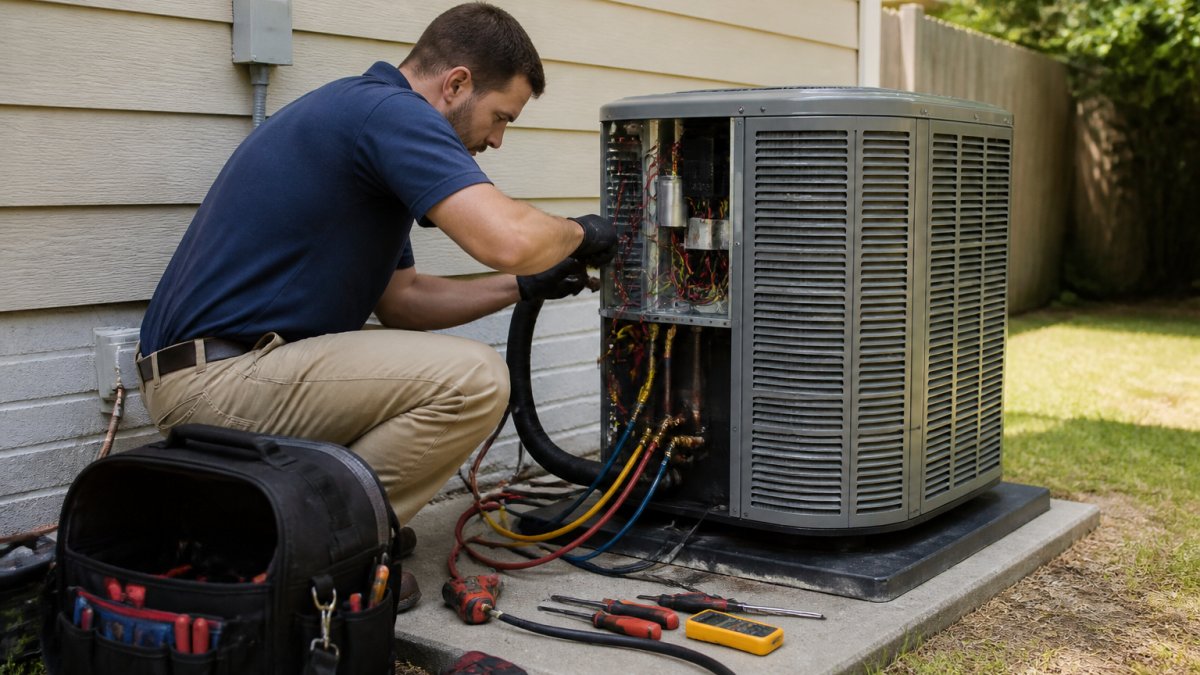
Your outdoor AC unit should cycle on and off smoothly. If it clicks repeatedly without the compressor starting, or if it hums but the compressor doesn't engage, you have a problem.
This usually indicates:
Electrical failure preventing compressor startup
Capacitor problems (the capacitor gives the compressor the initial power boost)
Compressor seized or stuck internally
Contactor failure (the switch that controls power)
Clicking is often the contactor trying to close but failing; humming means power reaches the compressor but it isn't turning. Both require professional diagnosis.
Circuit Breaker Repeatedly Tripping
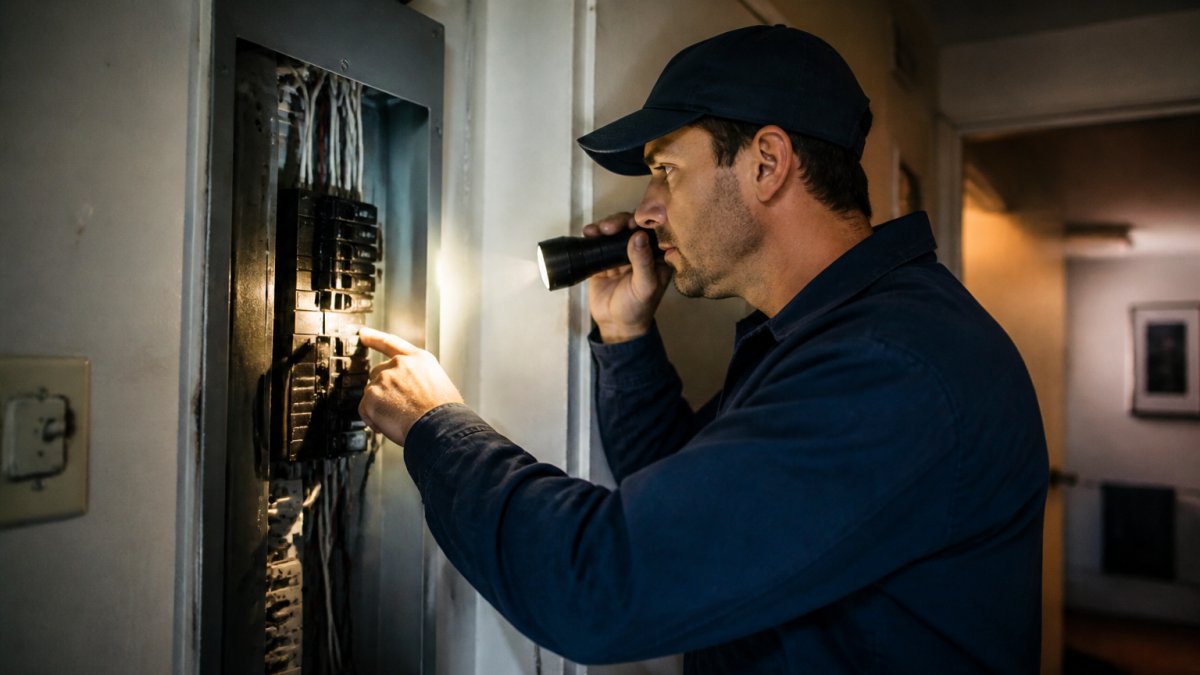
If your AC keeps tripping your home's circuit breaker, the compressor is likely drawing too much current.
This happens when:
Compressor motor is struggling due to internal damage
Electrical short in the compressor windings
Voltage imbalance in your electrical system
Capacitor failure causing startup problems
Never ignore a tripping breaker. It's your home's safety system protecting your wiring. Resetting it and running the AC again is not a solution; the underlying problem must be fixed.
AC Compressor Clutch Symptoms: What You're Actually Hearing
The compressor clutch is a mechanical component that engages your compressor when cooling is needed. Understanding clutch symptoms helps you distinguish between a clutch problem and full compressor failure.
AC compressor clutch symptoms are distinct from general compressor failure. The clutch engages and disengages thousands of times, and eventually wears out.
When the clutch fails, you'll notice:
Clicking sounds when the system tries to engage
No cooling even though the outdoor unit runs
Visible gap between the clutch and compressor pulley (if you look at the outdoor unit)
System running but compressor not spinning, the fan runs, but the compressor shaft stays still
A clutch problem is often cheaper to fix than full compressor replacement. However, if the compressor itself is damaged, replacing just the clutch won't help. Professional diagnosis is essential.
The clutch typically fails due to wear, but it can also fail if the compressor is already damaged internally. That's why our certified technicians at ACE ELECTRICAL AC & HEATING inspect the entire compressor assembly, not just the clutch.
How to Test a Car AC Compressor: Safe Diagnostic Steps
Testing your compressor safely requires basic tools and caution.

How to test a car AC compressor involves checking pressure, listening, and observing behavior. Here's the safe approach:
Step 1: Check System Pressure (5 minutes)
Locate the low-pressure service port on your compressor. This is usually a port with a blue cap on the suction line.
Normal pressure at idle should be 25-40 PSI on the low side.
Step 2: Listen to the Compressor (2 minutes)
Start the system and listen carefully to the compressor. A healthy compressor makes a smooth, consistent humming sound.
Step 3: Feel for Vibration (1 minute)
Place your hand on the compressor housing (not on moving parts). A working compressor vibrates smoothly.
Step 4: Check Clutch Engagement (2 minutes)
Watch the clutch pulley on the front of the compressor. When you turn on the AC, the pulley should spin.
Step 5: Monitor Temperature (10 minutes)
Run the system for 10 minutes. The outlet line should feel noticeably colder than the inlet line.
When to Stop and Call for Help:
Pressure reading is zero
Compressor makes grinding or clunking sounds
Clutch doesn't engage
Outlet line isn't cold
You smell burning or see oil leaking
These tests give basic information, but professional technicians have equipment for definitive diagnosis.
What Causes AC Compressor Failure
Understanding why compressors fail helps you prevent problems in the future.
The main causes of compressor failure are:
Refrigerant Leaks
Low refrigerant forces the compressor to work harder, run longer, and wear out faster.
Contaminated Refrigerant
Dirt, moisture, or debris damages compressor internals. Moisture especially causes corrosion and acid formation that eats away at seals and bearings.
Electrical Problems
Voltage imbalance, capacitor failure, or wiring issues prevent proper startup. The motor struggles, overheats, and eventually fails.
Lack of Maintenance
Dirty filters, clogged coils, and neglected maintenance force your compressor to work harder. Regular tune-ups catch problems before they become failures.
Age and Wear
Most compressors last 10-15 years. After that, bearings wear, seals degrade, and failure becomes likely. This is normal wear, not a defect.
Liquid Slugging
Preventing failure means maintaining your system properly. At ACE ELECTRICAL AC & HEATING, we recommend annual maintenance to catch problems early.
Can You Drive With a Bad AC Compressor: Safety and Risks
Many people wonder if they can keep driving while their AC compressor fails. The answer depends on what's actually wrong.
Can you drive with a bad AC compressor? Technically, yes, but you shouldn't, and here's why.
Automotive AC Compressors vs. Home HVAC Compressors
Automotive AC compressors are belt-driven and connected to your engine; home HVAC compressors are separate units with their own motors. The risks differ between the two.
For automotive systems, a failing compressor can:
Cause the serpentine belt to break, which disables power steering and the alternator
Generate metal debris that damages other parts of your AC system
Overheat and catch fire in extreme cases
Lock up suddenly, creating a safety hazard
Short-term driving is usually safe. If the clutch still engages, you can typically drive for a few days or weeks while arranging repairs.
Long-term driving is risky. Continuing to drive with a known failure increases the chance of belt damage or sudden failure.
Stop using the system immediately if:
The compressor makes grinding or clunking sounds
The clutch won't engage
You see oil or refrigerant leaking
The system overheats or smells like burning
For home HVAC systems, a failing compressor means no cooling, uncomfortable but not dangerous. Continuing to run a damaged compressor can cause complete failure and expensive repairs.
AC Compressor Replacement Cost: What to Expect
Compressor replacement is one of the most expensive AC repairs. Understanding the factors that affect cost helps you make informed decisions.
AC compressor replacement cost varies based on several factors. For automotive systems, replacement typically ranges from several hundred to over a thousand dollars, depending on the vehicle. For home HVAC systems, costs vary based on system size and type.
Factors That Affect Cost:
Factor | Impact | Example |
System type | Automotive vs. residential | Auto: higher labor; Home: varies by tonnage |
Compressor size | Larger systems cost more | 3-ton vs. 5-ton residential unit |
Brand and quality | Premium brands cost more | OEM vs. aftermarket parts |
Labor complexity | Some vehicles harder to access | Luxury cars cost more to service |
Additional repairs | Leaks, contamination require cleanup | Flushing system adds cost |
Warranty | Extended warranties increase price | Basic vs. 10-year coverage |
What's Included in Replacement:
New compressor unit
Labor to remove and install
System evacuation and recharge
Oil replacement
Leak testing
Warranty on parts and labor
What's NOT Usually Included:
System flushing (if contamination is present)
Additional repairs to other components
Refrigerant (sometimes charged separately)
Electrical repairs (if wiring is damaged)
Get quotes from multiple providers. At ACE ELECTRICAL AC & HEATING, we provide transparent pricing and explain exactly what's included before work begins.
When to Stop Using Your System and Call for Help
Knowing when to stop using your AC prevents further damage and keeps you safe.
Stop using your system immediately if:
You hear grinding, clunking, or metal-on-metal sounds
The outdoor unit smells like burning or overheating
Refrigerant is visibly leaking (oil spots under the unit)
The compressor won't start at all
Circuit breakers trip repeatedly
You see sparks or electrical arcing
Continuing to run the system in these conditions can cause:
Complete compressor failure (expensive)
Damage to other system components
Electrical hazards
Safety risks from refrigerant exposure
You can continue using your system if:
Air is cool but not as cold as usual
System cycles on and off more frequently than normal
You notice a slight performance decline
These signs suggest early problems, but the system is still functioning. Schedule service within a week or two.
Emergency service is needed for:
No cooling at all
System won't turn on
Unusual noises or smells
Electrical issues
ACE ELECTRICAL AC & HEATING offers 24/7 emergency service for situations like these. When your compressor fails in the middle of summer, our certified technicians respond quickly and diagnose the problem accurately.
If you're experiencing signs your AC compressor is failing, don't wait for a complete breakdown. Early diagnosis saves money and keeps your home comfortable. ACE ELECTRICAL AC & HEATING has served the area since 1998 with rapid-response cooling and heating solutions. Our certified technicians provide comprehensive system inspections, honest repair recommendations, and professional installation when replacement is needed. Call 504-914-8771 for 24/7 emergency service or to schedule a diagnostic appointment.
Frequently Asked Questions
What are the first warning signs your AC compressor is failing?
The earliest signs include warm or room-temperature air blowing from the vents, intermittent cooling that cuts out unexpectedly, and unusual noises like squealing, clunking, or clicking when the system runs. If you notice any of these, have your HVAC system inspected promptly. Catching problems early prevents complete compressor failure and more expensive repairs.
Can you drive with a bad AC compressor, or is it unsafe?
You can drive with a failing car AC compressor, but it's not recommended. A seized or damaged compressor can lock up the engine belt, stalling your vehicle suddenly and creating a safety hazard. Additionally, continuing to run a failing system damages other components and increases repair costs. Have it inspected and repaired as soon as possible.
What does a bad AC compressor clutch sound like?
A failing AC compressor clutch typically produces a squealing noise when the system engages, or a loud clunking sound if the clutch is slipping or seized. You may also hear rapid clicking as the clutch attempts to engage but fails. These noises indicate the clutch isn't properly connecting the compressor motor to the pulley, reducing cooling performance.
How much does AC compressor replacement cost?
Replacement costs vary significantly based on whether you have an automotive or home HVAC system, the compressor model, labor rates in your area, and whether additional repairs are needed. For an accurate estimate tailored to your specific situation, contact a certified technician who can assess your system and provide a detailed quote.
Click to Call 504-914-8771

Comments